
How to Create a Church Budget Plan in 5 Simple Steps (Easy Guide for Ministry Leaders)
Let's be real, church budget planning probably isn't the reason you answered the call to ministry. You got into this to serve God's people, preach the Word, and watch lives transform. But here's the thing: a solid budget is what keeps the lights on, the staff paid, and the mission moving forward.
The good news? Creating a church budget doesn't have to feel like pulling teeth. With a little planning (and a lot of prayer), you can build a financial roadmap that honors God's resources and fuels your ministry's vision.
Whether you're a senior pastor, church treasurer, or serve on the finance committee, this guide will walk you through five simple steps to create a church budget plan that actually works.
Why Church Budget Planning Matters
Before we dive into the how-to, let's talk about the why.
A church budget isn't just a spreadsheet full of numbers, it's a reflection of your ministry's priorities. Where your money goes shows what you truly value. Do you prioritize outreach? Discipleship? Missions? Your budget tells that story.
Good church bookkeeping and budgeting also builds trust with your congregation. When members see their tithes and offerings being managed with integrity, they're more likely to give generously. It's stewardship in action.
Plus, having a clear budget helps you avoid those awkward "we're short on funds this month" announcements. Nobody wants that.

Step 1: Review Last Year's Numbers and Set Goals
You can't know where you're going if you don't know where you've been. That's why the first step in church budget planning is looking back before you look forward.
Gather Your Historical Data
Pull together your financial records from the past 12 months (or longer if you have them). Look at:
Total income – tithes, offerings, donations, fundraising events
Total expenses – everything from utilities to missions giving
Seasonal patterns – when did giving peak? When did it dip?
Most churches experience lower giving during summer months when families are on vacation. Knowing this helps you plan ahead instead of panicking in July.
Set Realistic Goals
Once you've reviewed the numbers, it's time to dream a little. What do you want to accomplish this year? Maybe you want to:
Launch a new youth program
Hire an additional staff member
Increase your missions budget by 10%
Finally replace that ancient sound system
Write down both your financial goals and your ministry goals. A good budget connects the two, because every ministry initiative has a price tag.
Step 2: Determine Your Income Sources
Now let's talk about the money coming in. This is where you need to be both hopeful and realistic.
Identify All Revenue Streams
Most church income comes from a few key sources:
Tithes and offerings – This is typically the biggest slice of the pie
Special donations – Memorial gifts, designated funds, capital campaigns
Fundraising events – Dinners, auctions, community events
Facility rentals – If you rent out space for events or other groups
Other income – Interest, investments, grants
Be Conservative (But Faithful)
Here's where it gets tricky. You want to trust God to provide, but you also don't want to budget based on wishful thinking.
A good rule of thumb: create two scenarios. An optimistic projection based on growth, and a conservative projection based on current trends. Plan your essential expenses around the conservative number, and let the optimistic number guide your "stretch" goals.
Remember, nonprofit bookkeeping requires transparency and accountability. You're managing God's resources on behalf of His people: that's a big responsibility.
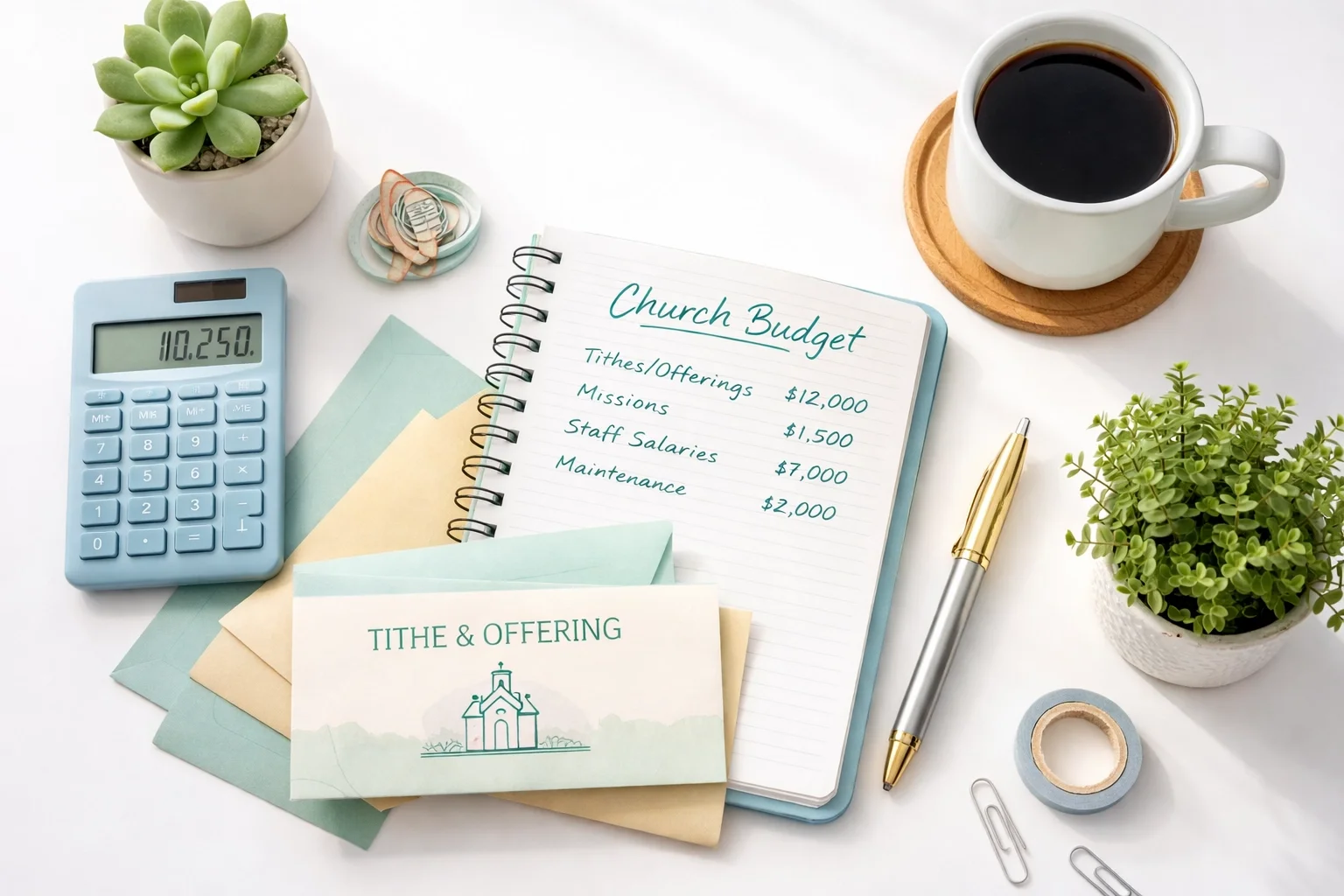
Step 3: Identify and Categorize Your Expenses
This is where bookkeeping for churches gets real. You need to know exactly where every dollar is going.
Track Your Spending
If you haven't been tracking expenses closely, now's the time to start. Go through bank statements, receipts, and invoices to see where money has actually been spent.
Create Clear Categories
Organize your expenses into categories that make sense for your church. Common ones include:
Personnel – Salaries, benefits, payroll taxes (typically 45-65% of most church budgets)
Facilities – Rent/mortgage, utilities, maintenance, insurance
Ministry programs – Children's ministry, youth group, adult education, worship
Missions and outreach – Local and global giving
Administration – Office supplies, software, bookkeeping services
Events – Holiday programs, VBS, special services
Having clear categories makes church treasurer duties much easier. You'll be able to see at a glance where the money is going and spot any red flags early.
Step 4: Balance Priorities and Build Reserves
Here's where the rubber meets the road. You've got your income projections and your expense categories: now you need to make it all balance.
Use a Tiered Approach
Not every expense is equally important. Try organizing your budget into three tiers:
Essential (Must-Have)
Staff salaries and benefits
Building mortgage/rent and utilities
Insurance and legal requirements
Core ministry programs
Important (Should-Have)
Staff development and training
Equipment upgrades
Expanded outreach efforts
Aspirational (Nice-to-Have)
New programs or initiatives
Building improvements
Increased missions giving
Fund your essentials first, then work your way up as income allows.

Don't Forget Financial Reserves
This is huge: and something many churches overlook. You need a rainy day fund.
Unexpected expenses happen. The HVAC system dies. A staff member needs emergency leave. Giving drops during an economic downturn. Having 2-3 months of operating expenses set aside gives you breathing room when life throws curveballs.
Building reserves isn't a lack of faith: it's wisdom. Proverbs 21:20 says, "The wise store up choice food and olive oil, but fools gulp theirs down." Be wise with what God has entrusted to you.
Step 5: Review, Adjust, and Stay Accountable
A budget isn't a "set it and forget it" document. It's a living, breathing financial plan that needs regular attention.
Monthly Check-Ins
At minimum, compare your actual income and expenses against your budget every month. Are you on track? Over budget somewhere? Under budget in another area?
Catching variances early gives you time to course-correct before small problems become big ones.
Quarterly Reviews
Meet with your finance committee or church leadership quarterly to discuss:
How actual numbers compare to projections
Any significant changes in giving patterns
Upcoming expenses or opportunities
Whether budget adjustments are needed
Plan Ahead for Next Year
Start working on next year's budget 3-4 months before your fiscal year ends. This gives you plenty of time to gather input, pray over decisions, and make thoughtful choices: instead of rushing at the last minute.

A Few Final Tips for Ministry Leaders
Before you go, here are some bonus tips to make your church budget planning even smoother:
Communicate with your congregation. Share budget updates (at least annually) so members know how their giving is being used. Transparency builds trust.
Get help if you need it. Church bookkeeping can be complex, especially with clergy payroll, designated funds, and nonprofit regulations. Don't be afraid to bring in a professional bookkeeping service.
Pray over your budget. Seriously. Invite God into the process. Ask Him to reveal priorities, provide wisdom, and multiply what you have for His glory.
Keep it simple. Your budget doesn't need to be complicated to be effective. Start with the basics and build from there.
Ready to Get Your Church Finances in Order?
Creating a church budget plan doesn't have to be overwhelming. With these five steps: reviewing history, projecting income, categorizing expenses, balancing priorities, and staying accountable: you'll have a financial foundation that supports your ministry and honors God.
And if you ever need a hand with church bookkeeping, nonprofit accounting, or just want someone to take the numbers off your plate so you can focus on ministry? That's exactly what we're here for at Branch Bookkeeping.
Here's to faithful stewardship and fruitful ministry in the year ahead!
